Core & Conditioning
Core Exercises 69 Moves With How-To Steps
69 core exercises, from the plank to the ab wheel rollout, with how to do each one. Filter by the equipment you have, then open any exercise for its steps.
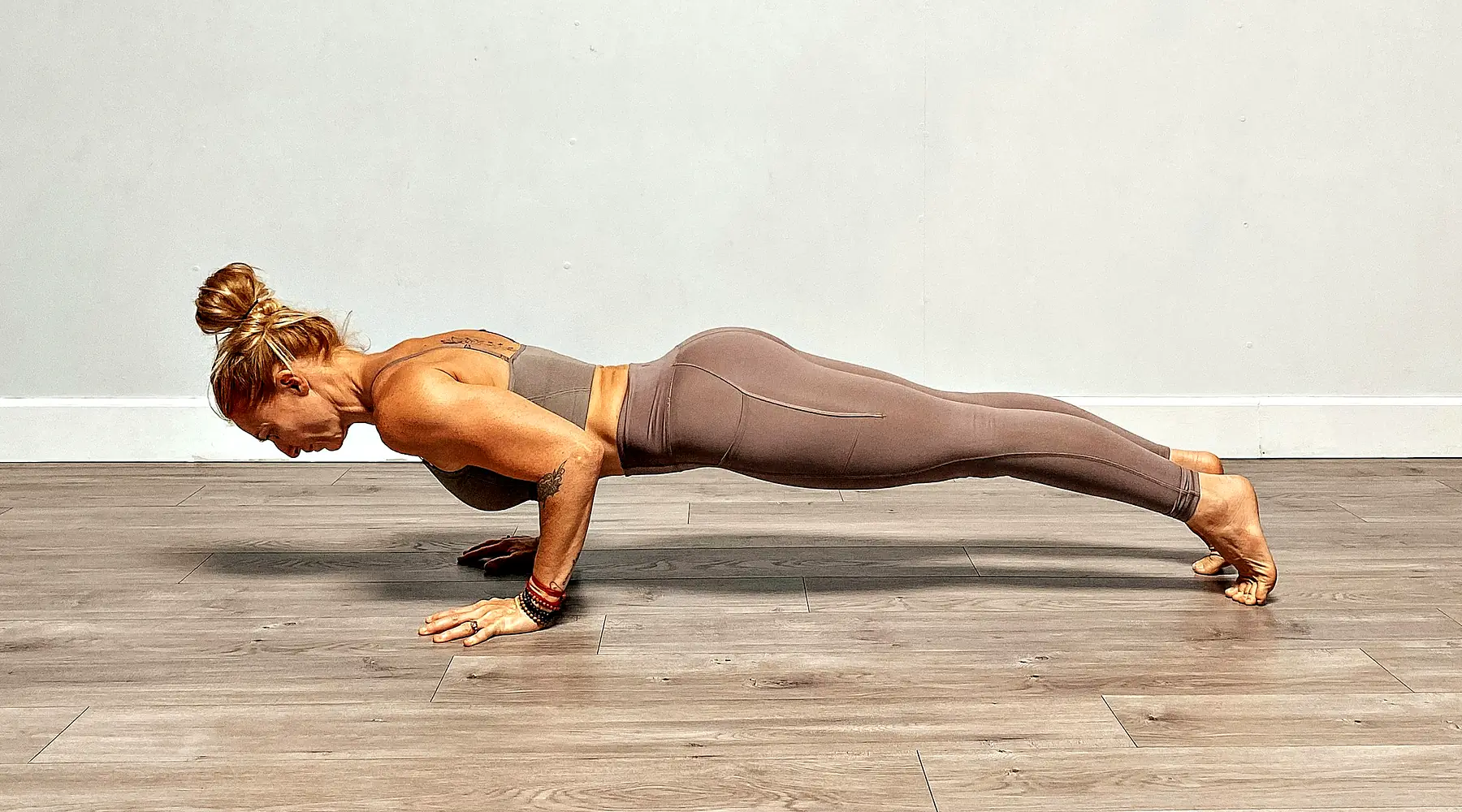
Photo: Heather Jacoby on Unsplash
All 69 core exercises 69
-
Other
Steps and tips
Also works obliques.
A crunch on a decline ab bench with your feet hooked in. Works the abs through a bigger range than a floor crunch.
How to do it
- Hook your feet under the pads and lie back on the bench with your hands across your chest or beside your head.
- Curl your shoulders up and forward toward your knees, pulling your ribs toward your hips.
- Pause at the top with your abs squeezed.
- Lower slowly, keeping tension on your abs, without fully relaxing at the bottom.
Keep in mind
- Curl, do not sit up. Your lower back stays on the bench.
- Do not pull on your neck. Your hands are there to rest, not to lift.
-
Cable
Steps and tips
Also works obliques.
A cable crunch done lying back on a stability ball, holding a rope behind your head. The ball adds a stretch at the bottom of every rep.
How to do it
- Sit on a ball in front of a low cable with a rope attachment, and hold the rope behind your head.
- Walk your feet forward and lie back over the ball so your lower back is supported.
- Curl your ribs toward your hips, pulling the rope with your abs, not your arms.
- Lower slowly until your back arches over the ball again.
Keep in mind
- The arms only hold the rope. If your elbows move, you are pulling with them.
- Let the ball give you a stretch at the bottom of every rep.
-
Bodyweight
Steps and tips
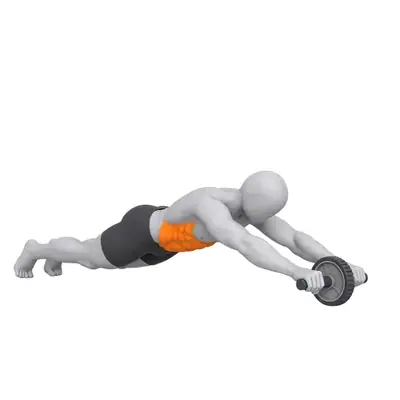
Kneeling and rolling a wheel out in front of you until your body is nearly flat, then pulling it back. A hard core exercise built on keeping the lower back from arching.
How to do it
- Kneel with the wheel on the floor under your shoulders and your arms straight.
- Brace your abs, squeeze your glutes, and tuck your pelvis slightly so your lower back cannot arch.
- Roll the wheel forward slowly, keeping your arms straight and your hips moving with your body.
- Stop just before your lower back wants to sag, and pause.
- Pull the wheel back to your knees with your abs, not by pushing with your arms.
Keep in mind
- A sagging lower back is the number one mistake, and it puts the work into your spine. Shorten the roll if it happens.
- Do not fold at the hips to get back. Your hips and shoulders should move as one piece.
- Start with short rollouts and add distance as you get stronger.
-
Bodyweight
Steps and tips
Also works shoulders.
A plank where you raise one arm, then the other, then one leg, then the other, each held in line with your body. Works the core at keeping the hips level as each support disappears.
How to do it
- Start in a plank on your hands or forearms with your body in one straight line and your feet a little apart.
- Raise one arm straight out in front until it is in line with your shoulders and back, hold for a moment, then set it down.
- Raise the other arm the same way.
- Raise one leg behind you until it is in line with your hips and back, hold, then set it down, and repeat with the other leg.
- Keep going around for the set time.
Keep in mind
- Hips stay level and square. Wider feet make it easier to hold still.
- Lift each limb only to the line of your body. Higher means your back is arching.
-
Band
Steps and tips
Mountain climbers with a band around your feet. The band makes each knee drive harder and works the hip flexors and abs.
How to do it
- Loop a band around both feet and get into a push-up position with your hands under your shoulders.
- Brace your core so your hips stay level.
- Drive one knee toward your chest against the band, then switch legs quickly.
- Keep alternating for the set, counting each knee drive as one rep.
Keep in mind
- Keep your hips down in line with your shoulders. Piking up takes the band tension away.
- A lighter band and quick feet beats a heavy band and stalled reps.
-
Band
Steps and tips
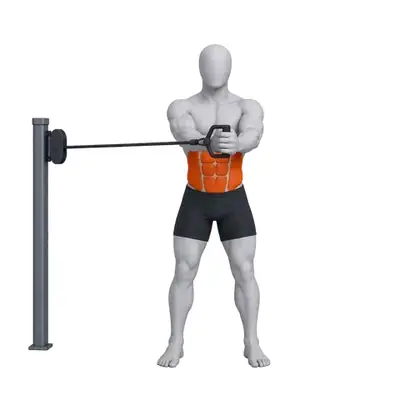
Pressing a band straight out from your chest while it tries to twist you toward the anchor. Trains the core to resist rotation.
How to do it
- Anchor a band at chest height and stand side-on to it, holding the band with both hands at your chest.
- Step away until the band is taut and stand with your feet about shoulder width apart.
- Press your hands straight out in front of your chest, keeping your hips and shoulders square.
- Hold for a moment, then bring your hands back to your chest. Finish the set, then face the other way.
Keep in mind
- The band wants to turn you toward the anchor. Not turning is the exercise.
- Keep your ribs down and breathe. Holding your breath is not bracing.
- The demo shows the cable version. With a band the movement is the same.
-
Band
Steps and tips
Also works obliques and shoulders.
Pulling a band diagonally across your body from high to low or low to high, like swinging an axe. Works the obliques and the whole core in rotation.
How to do it
- Anchor a band high, stand side-on to it, and hold the band with both hands above the shoulder nearest the anchor.
- Keep your arms nearly straight and pull the band down and across your body toward the opposite hip, turning your torso as you go.
- Control it back up to the start.
- Finish the set, then face the other way.
Keep in mind
- Turn from your hips and torso, not just your arms.
- Keep your knees soft and pivot the back foot so your knee is not twisted.
-
Barbell
Steps and tips
Also works lats and obliques.
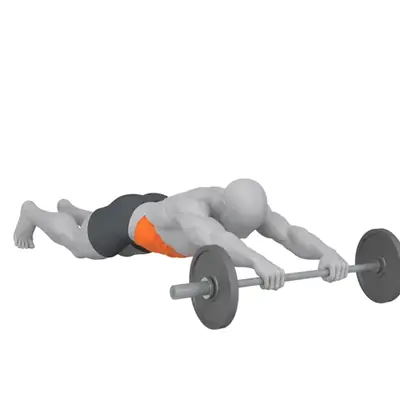
An ab rollout using a loaded barbell instead of a wheel. Works the whole core, especially at keeping the lower back from arching.
How to do it
- Kneel with a barbell on the floor in front of you and grip it about shoulder width apart.
- Brace your abs, squeeze your glutes, and tuck your pelvis slightly.
- Roll the bar forward slowly, keeping your arms straight and your hips moving with your body.
- Stop just before your lower back wants to sag, then pull the bar back to your knees with your abs.
Keep in mind
- A sagging lower back is the mistake to watch for. Shorten the roll if it happens.
- Round plates roll smoothly. Bumper plates work best.
-
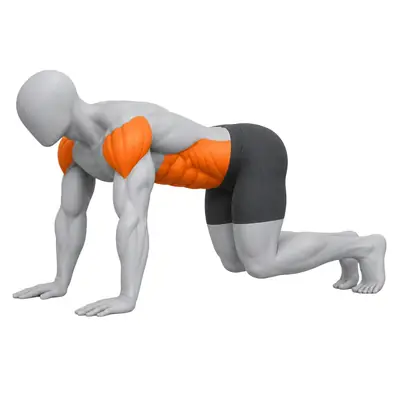
Bodyweight
Steps and tips
Also works quads and shoulders.
On your hands and toes with your knees hovering just off the floor and your back flat. Trains the core to hold still while the shoulders and quads work too.
How to do it
- Get onto your hands and knees with your hands under your shoulders and your knees under your hips.
- Tuck your toes under and brace your abs.
- Lift your knees an inch or two off the floor, keeping your back flat and your hips level.
- Hold for the set time, breathing steadily, then lower your knees.
Keep in mind
- Keep your back flat like a table. Hips rising up is the common fault.
- The knees only hover. An inch or two is enough.
-
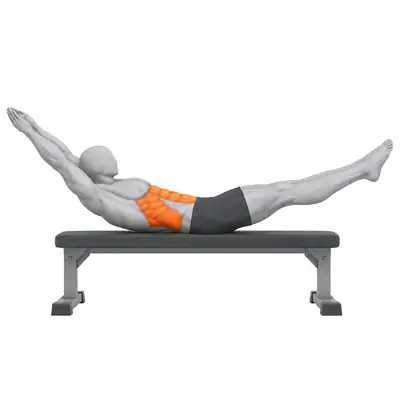
Bodyweight
Steps and tips
The hollow hold done lying along a flat bench, with your shoulders and straight legs lifted and your lower back pressed into the pad. The gymnastic core position, held for time.
How to do it
- Lie on your back along a flat bench with your arms reaching overhead and your legs straight.
- Press your lower back into the bench and brace your abs.
- Lift your shoulders and legs off the bench so your body makes a shallow curve.
- Hold for the set time, breathing steadily.
Keep in mind
- The lower back stays on the bench. If it lifts, raise your legs higher or bend your knees.
- Arms by your sides makes it easier, arms overhead makes it harder.
-
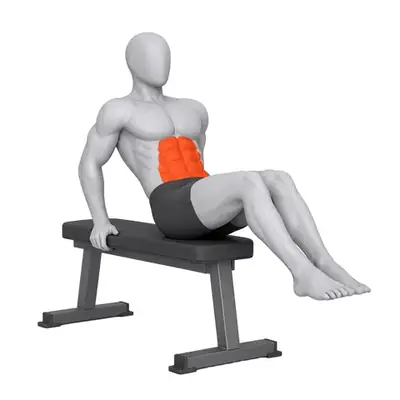
Bodyweight
Steps and tips
Sitting on the edge of a bench and pulling your knees to your chest. Works the lower abs and hip flexors.
How to do it
- Sit on the edge of a bench, lean back slightly, and hold the edge behind you for support.
- Extend your legs out in front of you, feet off the floor.
- Pull your knees in toward your chest, curling your hips up as they come.
- Extend your legs back out slowly without letting your feet touch the floor.
Keep in mind
- Lean back a little and keep your chest up. Rounding the whole back is not the goal.
- Slow on the way out. That is where the abs work hardest.
-
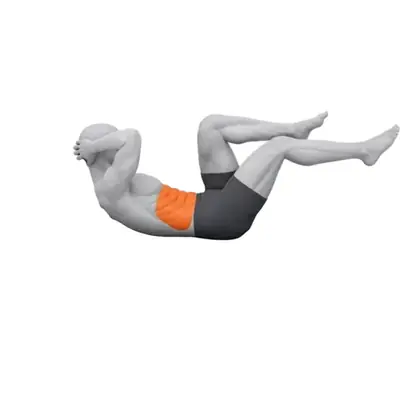
Bodyweight
Steps and tips
A crunch that twists to bring one elbow toward the opposite knee while the other leg straightens. Works the abs and obliques together.
How to do it
- Lie on your back with your hands beside your head and your knees bent, feet off the floor.
- Curl up and twist to bring one elbow toward the opposite knee while straightening the other leg.
- Switch sides in one smooth motion, like pedalling a bicycle.
- Keep alternating for the set, counting each twist as one rep.
Keep in mind
- Lead with your shoulder, not your elbow. Do not pull on your neck.
- Slow and controlled beats fast and sloppy.
-
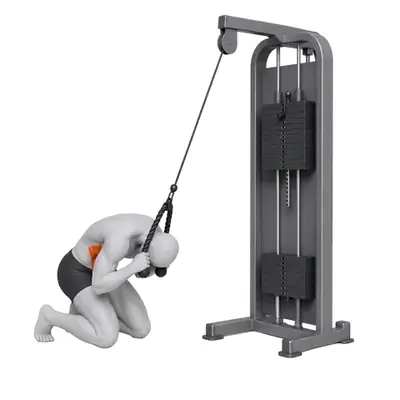
Cable
Steps and tips
A kneeling crunch holding a rope from a high cable. The best way to load the abs heavily.
How to do it
- Attach a rope to a high pulley and kneel facing the machine, holding the rope beside your head.
- Keep your hips still and your arms fixed in place.
- Crunch down, pulling your ribs toward your hips until your elbows approach your thighs.
- Return slowly until your abs are stretched.
Keep in mind
- Your hips do not move. If they sit back toward your heels, you are using your hip flexors.
- The arms only hold the rope. Pulling with them is the common cheat.
-
Cable
Steps and tips
Rotating your torso against a cable set at chest height with your arms straight. Works the obliques.
How to do it
- Set the pulley at chest height and stand side-on to the machine, holding the handle with both hands and straight arms.
- Step away until the weight is off the stack, feet about shoulder width apart.
- Turn your torso away from the machine, sweeping your arms across in front of you.
- Return slowly. Finish the set, then face the other way.
Keep in mind
- Turn from your torso and hips, not your arms. Your arms only connect you to the cable.
- Let the back foot pivot so your knee does not get twisted.
-
Cable
Steps and tips
Also works obliques and shoulders.
Pulling a cable diagonally across your body, from high to low, like swinging an axe. Works the obliques and the whole core in rotation.
How to do it
- Set the pulley high and stand side-on to the machine, holding the handle with both hands above the near shoulder.
- Keep your arms nearly straight and pull the handle down and across your body toward the opposite hip, turning your torso as you go.
- Control it back up to the start.
- Finish the set, then face the other way.
Keep in mind
- Turn from your hips and torso. If only your arms move, it is a shoulder exercise.
- Pivot the back foot so your knee turns with you.
-
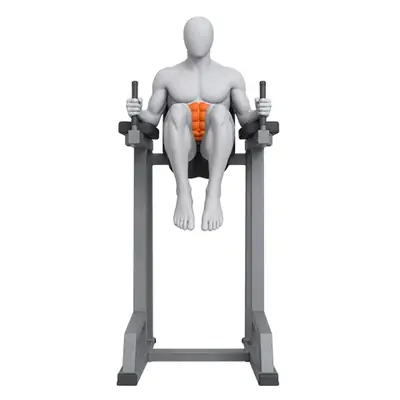
Bodyweight
Steps and tips
Also works obliques.
Raising your knees to your chest while supported on your forearms in the captain's chair. Works the lower abs and hip flexors.
How to do it
- Step into the chair, rest your forearms on the pads, and press your back against the pad.
- Let your legs hang straight down.
- Raise your knees toward your chest, curling your hips up at the top.
- Lower slowly until your legs hang straight.
Keep in mind
- Curl the hips at the top. Lifting the knees alone is mostly hip flexors.
- No swinging. If you need momentum, do fewer reps.
-
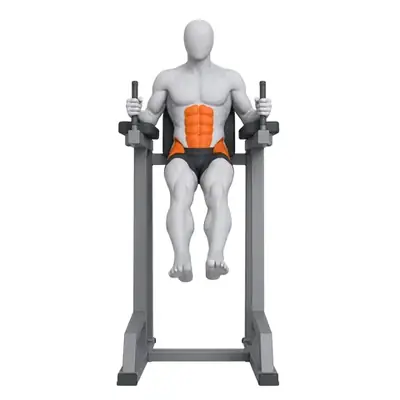
Bodyweight
Steps and tips
Also works obliques.
Raising your straight legs to level with your hips while supported on your forearms in the captain's chair. A harder version of the knee raise for the lower abs.
How to do it
- Step into the chair, rest your forearms on the pads, and press your back against the pad.
- Let your legs hang straight down.
- Raise your straight legs until they are level with your hips, curling your hips up at the top.
- Lower slowly until your legs hang straight.
Keep in mind
- Keep your legs straight and your movement slow. Swinging is the common cheat.
- Bend the knees a little if you cannot keep your back on the pad.
-
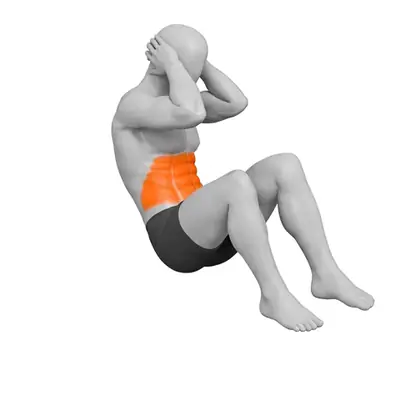
Bodyweight
Steps and tips
Also works obliques.
A crunch that brings one elbow toward the opposite knee. Works the abs and obliques.
How to do it
- Lie on your back with your knees bent and your hands beside your head.
- Curl up and twist to bring one elbow toward the opposite knee, lifting that knee to meet it.
- Lower slowly and repeat on the other side.
- Keep alternating for the set, counting each twist as one rep.
Keep in mind
- Lead with your shoulder, not your elbow, and do not pull on your neck.
- Slow reps. Speed here is momentum.
-
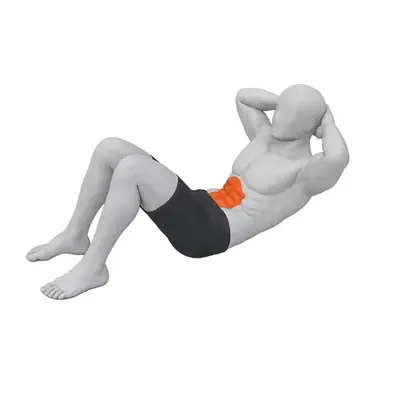
Bodyweight
Steps and tips
Curling your shoulders up off the floor with your knees bent. The basic ab exercise.
How to do it
- Lie on your back with your knees bent, feet flat, and your hands across your chest or beside your head.
- Curl your shoulders up off the floor, pulling your ribs toward your hips.
- Pause for a moment at the top with your abs squeezed.
- Lower slowly until your shoulders touch the floor.
Keep in mind
- Your lower back stays on the floor. It is a curl, not a sit-up.
- Do not pull on your neck. Look at the ceiling, not your knees.
-
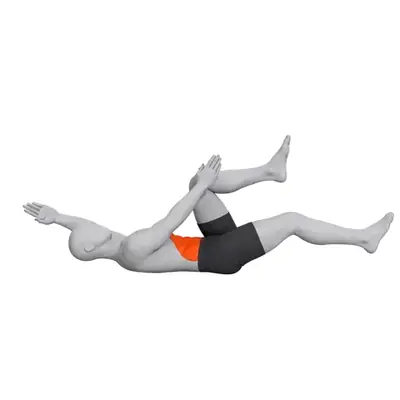
Bodyweight
Steps and tips
Lying on your back and lowering one arm and the opposite leg while the core keeps your back flat. Teaches bracing more than it builds abs.
How to do it
- Lie on your back with your arms pointing at the ceiling and your knees bent over your hips.
- Press your lower back into the floor and brace your abs.
- Lower one arm overhead and the opposite leg toward the floor at the same time, keeping your back flat.
- Return and repeat with the other arm and leg. Keep alternating for the set.
Keep in mind
- The moment your lower back lifts off the floor, you have gone too far. Shorten the reach.
- Breathe out as you lower the limbs.
-
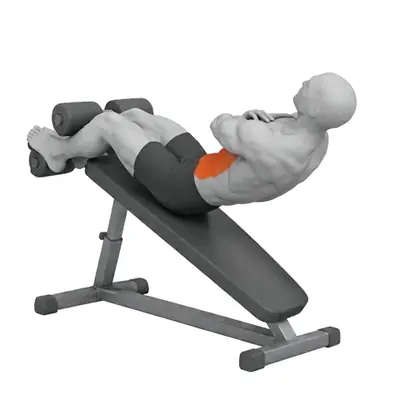
Bodyweight
Steps and tips
A crunch on a decline bench with your feet hooked in. Works the abs against more of your body weight than a floor crunch.
How to do it
- Hook your feet under the pads and lie back on the decline bench with your hands across your chest.
- Curl your shoulders up and forward, pulling your ribs toward your hips.
- Pause at the top with your abs squeezed.
- Lower slowly without fully relaxing at the bottom.
Keep in mind
- Curl, do not sit up. The lower back stays on the bench.
- A steeper bench makes it harder.
-
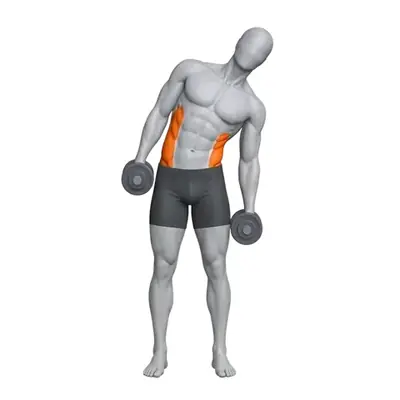
Dumbbell
Steps and tips
Also works obliques.
Bending sideways with a dumbbell in one hand and straightening back up. Works the obliques on the side without the weight.
How to do it
- Stand tall with a dumbbell in one hand at your side and your other hand on your hip or behind your head.
- Bend sideways toward the dumbbell, letting it slide down your leg.
- Pull yourself back up to standing using the opposite side of your waist.
- Finish the set, then switch hands.
Keep in mind
- Bend straight sideways, not forward. Keep your hips still.
- One dumbbell, not two. Two cancel each other out.
-
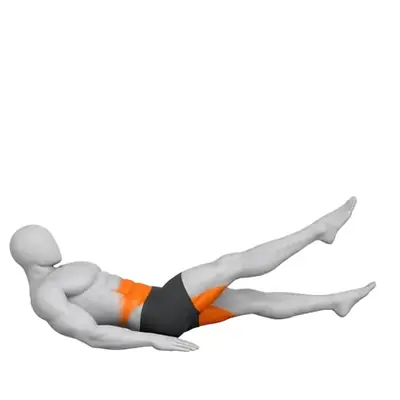
Bodyweight
Steps and tips
Lying on your back and kicking your straight legs up and down a few inches off the floor. Works the lower abs and hip flexors.
How to do it
- Lie on your back with your hands under your hips and your legs straight, a few inches off the floor.
- Press your lower back into the floor.
- Kick your legs up and down in small quick movements, one up while the other goes down.
- Keep going for the set, counting each kick as one rep.
Keep in mind
- Keep your lower back on the floor. If it arches, raise your legs higher or bend your knees.
- Small kicks. Big kicks are easier and do less.
-
Machine
Steps and tips
Also works lower back, obliques, quads, lats and shoulders.
A sit-up on the glute-ham developer, leaning back past the hips before sitting up. A big-range ab exercise that also loads the hip flexors.
How to do it
- Sit on the GHD pad with your feet locked in and your hips just past the front edge.
- Lean back under control until your body is roughly level with the floor or a little below.
- Sit up hard, driving with your abs and hip flexors, and touch the pad or reach forward.
- Lower back under control and repeat.
Keep in mind
- Build up the range over weeks. Going all the way back on day one is how people hurt their lower back.
- Keep the reps smooth. Do not throw your head to get up.
-
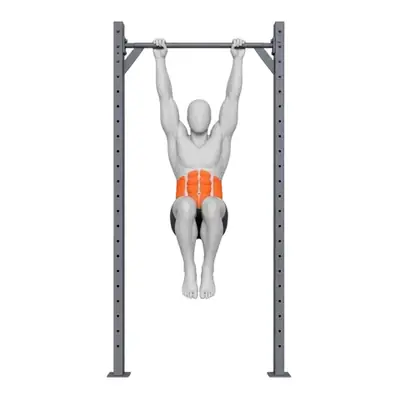
Bodyweight
Steps and tips
Hanging from a bar and raising your knees to your chest. Works the lower abs and hip flexors with a grip challenge thrown in.
How to do it
- Hang from a bar with straight arms and your body still.
- Raise your knees toward your chest, curling your hips up at the top.
- Pause for a moment.
- Lower slowly until your legs hang straight.
Keep in mind
- Curl the hips at the top. Lifting the knees alone is mostly hip flexors.
- No swinging. Stop and reset if you start to sway.
-
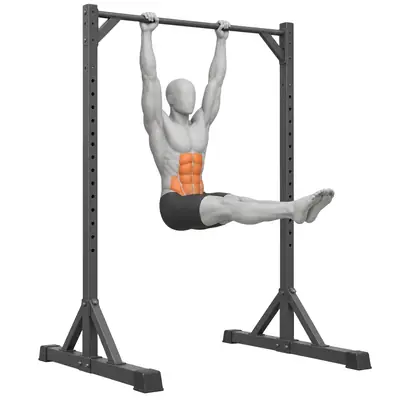
Bodyweight
Steps and tips
Hanging from a bar with your straight legs held out in front at hip height, making an L. A hard core hold that also tests your grip.
How to do it
- Hang from a bar with straight arms and your hands about shoulder width apart.
- Brace your abs and pull your shoulders down away from your ears.
- Raise your straight legs until they are level with your hips.
- Hold for the set time without swinging, then lower your legs slowly.
Keep in mind
- Legs straight and level. Once they drop below your hips, end the set.
- Build up to it with the Hanging Tuck Hold, knees bent.
-
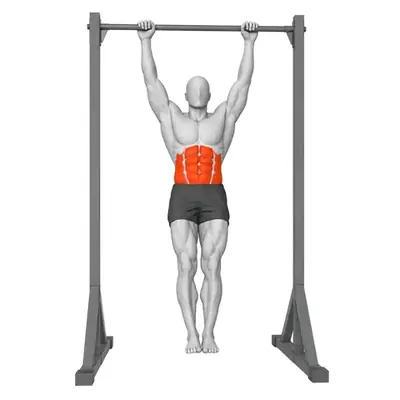
Bodyweight
Steps and tips
Hanging from a bar and raising your straight legs to level with your hips or higher. A harder version of the knee raise for the lower abs.
How to do it
- Hang from a bar with straight arms and your body still.
- Raise your straight legs until they are at least level with your hips, curling your hips up at the top.
- Pause for a moment.
- Lower slowly until your legs hang straight.
Keep in mind
- Slow reps and no swinging. Momentum is the whole cheat here.
- Bend the knees a little if straight legs pull your back into an arch.
-
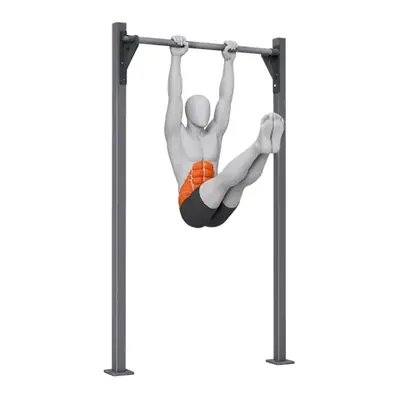
Bodyweight
Steps and tips
Also works lats.
Hanging from a bar and raising your straight legs all the way up until your body folds in half. The hardest hanging leg raise.
How to do it
- Hang from a bar with straight arms and your body still.
- Raise your straight legs up past your hips and keep going until your feet approach the bar.
- Pause at the top with your body folded.
- Lower slowly all the way back to the hang.
Keep in mind
- Press down on the bar with straight arms as your legs rise. That is what gets them past level.
- Slow on the way down. Dropping the legs is where swinging starts.
-
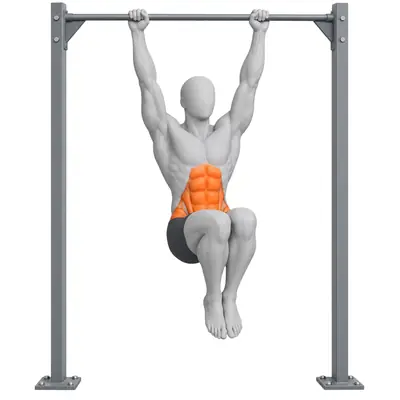
Bodyweight
Steps and tips
Hanging from a bar with your knees pulled up toward your chest. The easier step before the Hanging L-Sit, held for time.
How to do it
- Hang from a bar with straight arms and your hands about shoulder width apart.
- Brace your abs and pull your shoulders down away from your ears.
- Bring your knees up toward your chest and keep them there.
- Hold for the set time without swinging, then lower your legs slowly.
Keep in mind
- Keep your knees above your hips for the whole hold.
- When it gets easy, straighten your legs out in front. That is the Hanging L-Sit.
-
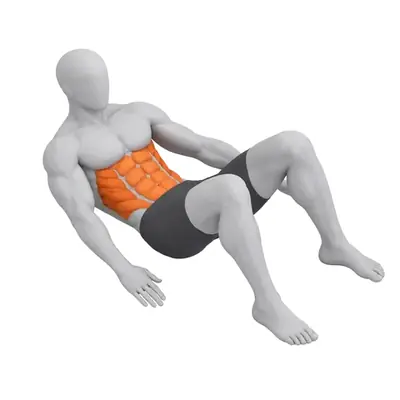
Bodyweight
Steps and tips
Also works obliques.
Lying on your back with your knees bent, crunching a little and reaching one hand to the heel on the same side, then the other. Works the obliques.
How to do it
- Lie on your back with your knees bent, feet flat and about hip width apart, arms along your sides.
- Lift your head and shoulders a little off the floor.
- Reach one hand down toward the heel on the same side, bending sideways at the waist.
- Come back to the middle and reach to the other side. Keep alternating for the set.
Keep in mind
- Keep your shoulders off the floor for the whole set.
- Move your feet closer to your hips if you cannot reach your heels.
- Log the total reps. Each touch counts as one.
-
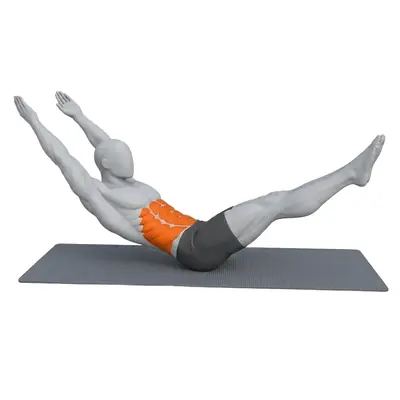
Bodyweight
Steps and tips
Lying on your back and holding your shoulders and legs off the floor with your lower back pressed down. The gymnastic core position, held for time.
How to do it
- Lie on your back with your arms overhead and your legs straight.
- Press your lower back into the floor and brace your abs.
- Lift your shoulders and legs a few inches off the floor so your body makes a shallow curve.
- Hold for the set time, breathing steadily.
Keep in mind
- The lower back stays on the floor. If it lifts, raise your legs higher or bend your knees.
- Arms by your sides makes it easier, arms overhead makes it harder.
-
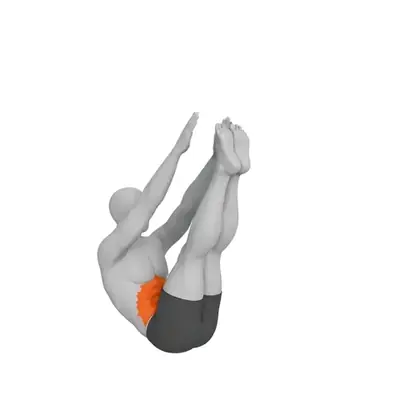
Bodyweight
Steps and tips
Lying flat and folding up to touch your hands to your feet, arms and legs rising together. Works the whole front of the core.
How to do it
- Lie on your back with your arms overhead and your legs straight.
- Lift your arms and legs at the same time, folding at the hips to bring your hands toward your feet.
- Touch or reach for your feet at the top.
- Lower slowly back to flat without letting your feet or hands drop.
Keep in mind
- Keep your arms and legs straight. Bending them makes it easier and works less.
- Slow on the way down.
-
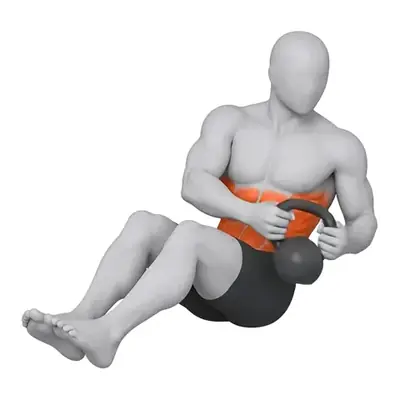
Kettlebell
Steps and tips
Also works obliques.
Sitting leaned back and turning a kettlebell from side to side. Works the obliques and the whole core.
How to do it
- Sit on the floor with your knees bent, lean back slightly, and hold a kettlebell by the horns at your chest.
- Lift your feet off the floor if you can, or keep your heels down to make it easier.
- Turn your torso to one side, bringing the bell toward the floor beside your hip, then turn to the other side.
- Keep alternating for the set, counting each turn as one rep.
Keep in mind
- Turn your shoulders, not just your arms. The bell follows your chest.
- Keep your back long. Rounding to twist strains the lower back.
-
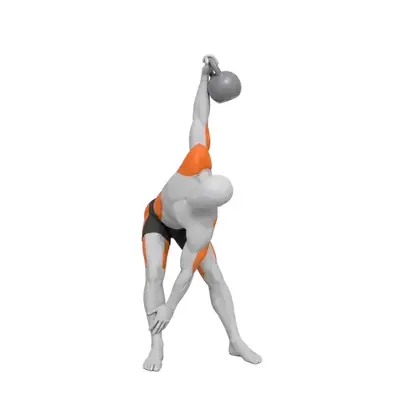
Kettlebell
Steps and tips
Also works lower back.
Holding a kettlebell overhead while you hinge sideways to touch the floor. Builds shoulder stability and works the obliques and hamstrings.
How to do it
- Stand with your feet a little wider than shoulder width and press a kettlebell overhead in one hand.
- Turn both feet slightly away from the loaded side and keep your eyes on the bell.
- Push your hips out toward the loaded side and hinge down, sliding your free hand down the inside of your leg.
- Go as low as you can with the bell still straight overhead, then stand back up.
- Finish the set, then switch sides.
Keep in mind
- The loaded arm stays straight and pointed at the ceiling the whole time.
- It is a sideways hinge, not a side bend. Push the hips out first.
-
Barbell
Steps and tips
Also works obliques.
Swinging the end of a landmine barbell from hip to hip with straight arms. Works the obliques and the whole core in rotation.
How to do it
- Stand facing the anchored bar with your feet wider than your shoulders and hold the end with both hands at chest height, arms straight.
- Turn your torso to lower the bar in an arc toward one hip, pivoting your feet as you go.
- Swing it back up and over to the other hip.
- Keep alternating for the set, counting each side as one rep.
Keep in mind
- Arms stay straight. The turn comes from your hips and torso.
- Pivot your feet so your knees turn with you.
-
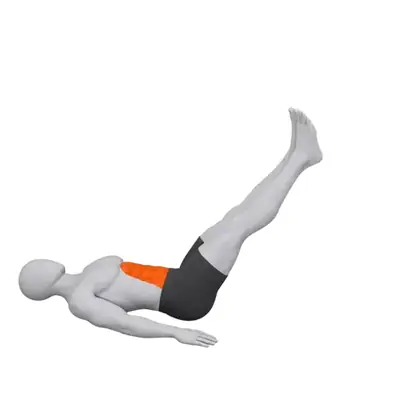
Bodyweight
Steps and tips
Lying on your back and raising your straight legs to vertical, then lowering them without touching the floor. Works the lower abs and hip flexors.
How to do it
- Lie on your back with your hands under your hips or at your sides and your legs straight.
- Press your lower back into the floor.
- Raise your straight legs until they point at the ceiling.
- Lower them slowly until they are a few inches off the floor, then raise again.
Keep in mind
- Keep your lower back on the floor. If it arches as the legs come down, stop higher.
- Slow on the way down. That is where the work is.
-
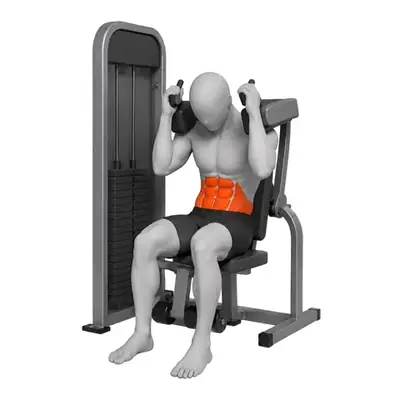
Machine
Steps and tips
A crunch on the seated ab machine, curling forward against the pads. Loads the abs with no strain on the neck.
How to do it
- Set the seat so the pads sit against your upper chest or shoulders, and hook your feet in if there are rollers.
- Grip the handles and sit tall.
- Curl forward, pulling your ribs toward your hips against the pads.
- Return slowly until your abs are stretched.
Keep in mind
- Curl from the ribs. Bending at the hips uses the hip flexors instead.
- Do not pull with your arms. They only hold the handles.
-
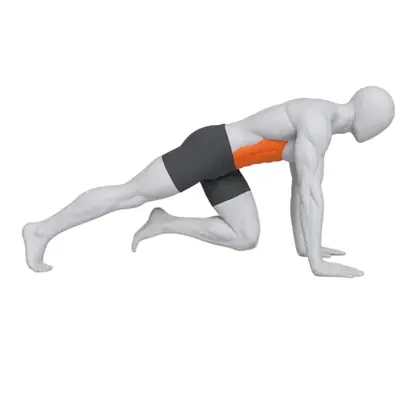
Bodyweight
Steps and tips
Running your knees toward your chest in a push-up position. A core and conditioning exercise.
How to do it
- Get into a push-up position with your hands under your shoulders and your body in one line.
- Brace your core so your hips stay level.
- Drive one knee toward your chest, then switch legs quickly.
- Keep alternating for the set, counting each knee drive as one rep.
Keep in mind
- Keep your hips down in line with your shoulders. Bouncing them up makes it easier.
- Fast feet, still shoulders.
-
Cable
Steps and tips
Also works obliques.
A side crunch on a cable, bending toward the floor against the weight. Works the obliques one side at a time.
How to do it
- Set the pulley high and stand or kneel side-on to the machine, holding the handle beside your head with the near hand.
- Keep your hips still.
- Crunch sideways, pulling your ribs toward your hip on that side.
- Return slowly. Finish the set, then face the other way.
Keep in mind
- Bend sideways, not forward. The elbow goes toward the hip.
- Log reps for one side. SetLift counts the other side for you.
-
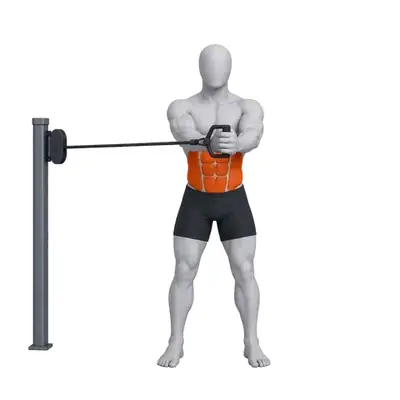
CableBand
Steps and tips
Pressing a cable or band straight out from your chest while it tries to twist you. Trains the core to resist rotation.
How to do it
- Anchor a band or set a pulley at chest height and stand side-on to it, holding the handle with both hands at your chest.
- Step away until it is taut and stand with your feet about shoulder width apart.
- Press your hands straight out in front of your chest, keeping your hips and shoulders square.
- Hold for a moment, then bring your hands back. Finish the set, then face the other way.
Keep in mind
- Not turning is the exercise. If you cannot stay square, go lighter.
- Keep breathing. Bracing is not holding your breath.
-
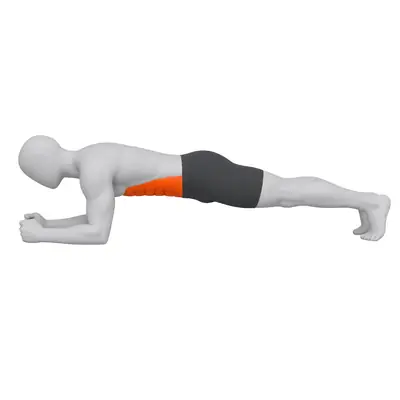
Bodyweight
Steps and tips
Holding a straight line from head to heels on your forearms. Trains the whole core to resist movement.
How to do it
- Lie face down and prop yourself on your forearms, with your elbows directly under your shoulders.
- Tuck your toes and lift your body so it makes one straight line from head to heels.
- Squeeze your glutes, brace your abs as if bracing for a punch, and press the floor away with your forearms.
- Look at the floor a foot in front of your hands so your neck stays neutral.
- Breathe steadily and hold for as long as the line stays straight.
Keep in mind
- Hips sagging or sticking up are the two most common faults. A mirror or a photo shows you which one you do.
- Do not hold your breath. Slow, calm breaths for the whole hold.
- Stop the set when your form breaks, not when the timer says so. Short perfect holds beat long sagging ones.
-
Bodyweight
Steps and tips
Also works chest and shoulders.
Holding a plank on your hands and lifting one hand at a time. Works the core at keeping the hips level when a support disappears.
How to do it
- Get into a push-up position with your hands under your shoulders and your feet a little apart.
- Brace your core and squeeze your glutes so your hips stay level.
- Lift one hand off the floor and reach it forward or tap the opposite shoulder, then put it back.
- Lift the other hand. Keep alternating for the set time.
Keep in mind
- Hips do not twist. Wider feet make it easier to stay square.
- Slow lifts. Speed hides the wobble instead of fixing it.
-
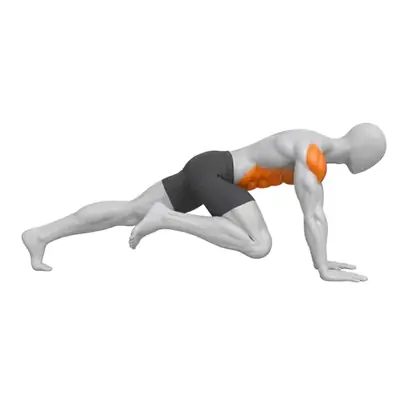
Bodyweight
Steps and tips
Also works hip flexors.
From a high plank, drawing one knee in under your chest and sending it back, slowly and one side at a time. Works the abs and hip flexors while the plank holds.
How to do it
- Get into a push-up position with your hands under your shoulders and your body in one line.
- Brace your core so your hips stay level.
- Draw one knee in under your chest, pause, then send the foot back to the floor.
- Repeat with the other leg. Keep alternating for the set.
Keep in mind
- Slow and controlled. The fast version is Mountain Climbers.
- Keep your shoulders over your hands as the knee comes in.
- Log the total reps. Each knee tuck counts as one.
-
Bodyweight
Steps and tips
Also works chest, shoulders and triceps.
Moving from a forearm plank up to a hand plank one arm at a time, then back down. Works the core, shoulders and triceps.
How to do it
- Start in a forearm plank with your elbows under your shoulders and your body in one line.
- Place one hand where its elbow was and press up, then the other, so you are in a push-up position.
- Lower one forearm back down, then the other.
- Keep going for the set time, leading with the other arm each rep.
Keep in mind
- Keep your hips as still as you can. Rocking side to side is the common fault.
- Alternate which arm leads so one side does not do all the pressing.
-
Bodyweight
Steps and tips
Also works obliques.
Holding a plank and lifting one foot a few inches off the floor. Works the core and glutes at keeping the hips level.
How to do it
- Start in a forearm or hand plank with your body in one straight line.
- Brace your core and squeeze your glutes.
- Lift one foot a few inches off the floor without letting your hips tilt or your lower back arch.
- Hold for a few seconds, put it down, and lift the other. Keep alternating for the set time.
Keep in mind
- Lift the foot with your glute, not by arching your back. Small lifts only.
- Hips stay level. If they tilt, lift less.
-
Bodyweight
Steps and tips
Also works quads and shoulders.
Mountain climbers where both feet switch in the air at the same time. A fast core and conditioning exercise.
How to do it
- Get into a push-up position with one knee driven toward your chest.
- Brace your core so your hips stay level.
- Jump and switch your legs in the air so the other knee comes forward as the first goes back.
- Keep switching for the set, counting each switch as one rep.
Keep in mind
- Land softly on the balls of your feet.
- Keep your hips down and your shoulders still.
-
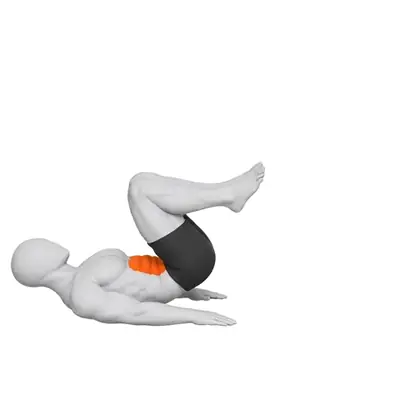
Bodyweight
Steps and tips
Lying on your back and curling your hips up off the floor with your knees bent. Works the lower abs.
How to do it
- Lie on your back with your knees bent over your hips and your hands at your sides.
- Press your lower back into the floor.
- Curl your hips up off the floor, bringing your knees toward your chest.
- Lower slowly until your hips touch the floor again.
Keep in mind
- Curl the hips, do not swing the legs. It is a small movement.
- Slow on the way down.
-
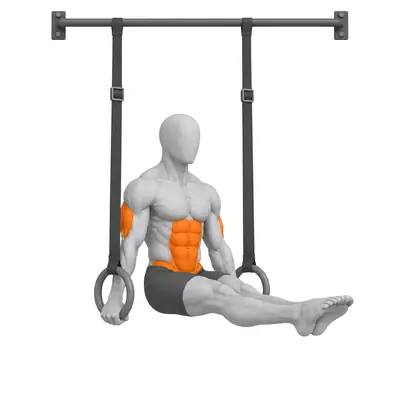
Suspension
Steps and tips
Also works triceps and shoulders.
Holding yourself up on gymnastic rings with straight arms and your straight legs out in front, making an L. Works the core, with the triceps and shoulders holding you up.
How to do it
- Set the rings low, take one in each hand and press up until your arms are straight and the rings sit beside your hips.
- Lock your arms, keep the rings close to your sides and push your shoulders down.
- Lift your straight legs until they are level with your hips.
- Hold for the set time, then lower your feet to the floor.
Keep in mind
- Keep the rings still and close to your body. Letting them drift out is the common fault.
- Tuck your knees to make it easier while you build up.
-
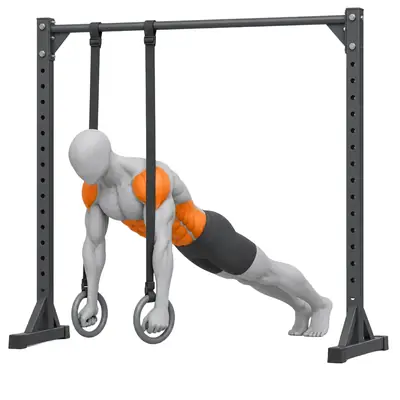
Suspension
Steps and tips
Also works shoulders.
A push-up position held with your hands in gymnastic rings. The rings move, so your core and shoulders work harder to hold you still.
How to do it
- Set the rings a few inches off the floor and take one in each hand.
- Walk your feet back until you are in a push-up position with straight arms and your hands under your shoulders.
- Squeeze your glutes and brace your abs so your body makes one straight line.
- Hold for the set time, keeping the rings still.
Keep in mind
- Keep the rings close together under your shoulders. If they drift apart, end the set.
- Raise the rings higher to make it easier.
-
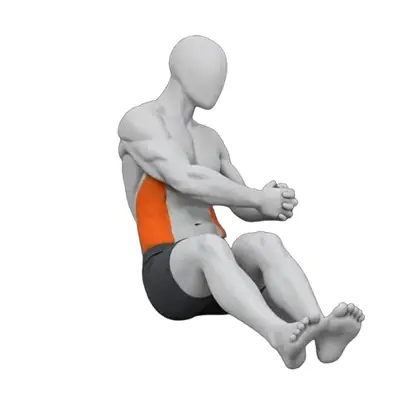
Bodyweight
Steps and tips
Sitting leaned back and turning your torso from side to side, with or without a weight. Works the obliques.
How to do it
- Sit on the floor with your knees bent, lean back slightly, and clasp your hands or hold a weight at your chest.
- Lift your feet off the floor if you can, or keep your heels down to make it easier.
- Turn your torso to one side, then to the other.
- Keep alternating for the set, counting each turn as one rep.
Keep in mind
- Turn your shoulders, not just your arms.
- Keep your back long and your chest up. Rounding to twist strains the lower back.
-
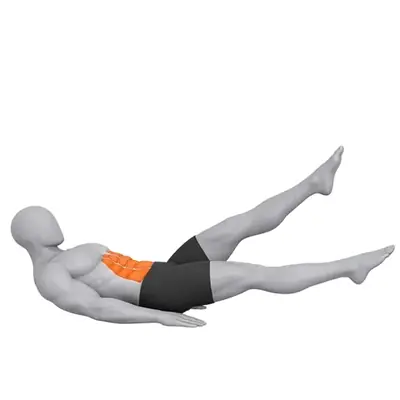
Bodyweight
Steps and tips
Lying on your back with your legs raised and crossing them over each other side to side. Works the lower abs and hip flexors.
How to do it
- Lie on your back with your hands under your hips and your straight legs raised a few inches off the floor.
- Press your lower back into the floor.
- Cross one leg over the other, then swap so the other leg is on top, like scissors.
- Keep going for the set, counting each cross as one rep.
Keep in mind
- Keep your lower back on the floor. Raise your legs higher if it arches.
- Small quick movements.
-
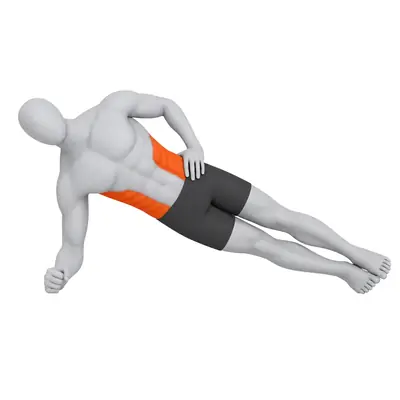
Bodyweight
Steps and tips
Holding your body in a straight line on one forearm and the side of one foot. Works the obliques and the muscles that keep your hips level.
How to do it
- Lie on your side with your elbow under your shoulder and your legs straight, feet stacked.
- Lift your hips until your body makes one straight line from head to feet.
- Hold for the set time, breathing steadily, then switch sides.
Keep in mind
- Hips up and forward. Letting them sag or drift back is the common fault.
- Drop the bottom knee to the floor to make it easier.
-
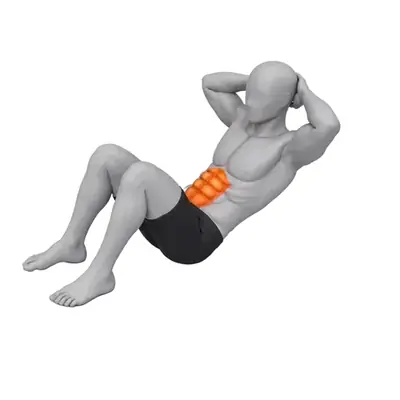
Bodyweight
Steps and tips
Sitting all the way up from lying flat with your knees bent. Works the abs and hip flexors.
How to do it
- Lie on your back with your knees bent, feet flat, and your hands across your chest or beside your head.
- Curl up, lifting your shoulders first, and sit all the way up until your chest approaches your thighs.
- Lower slowly, rounding down one part of your back at a time.
Keep in mind
- Round up and round down. Sitting up with a straight back is all hip flexors.
- Do not pull on your neck.
-
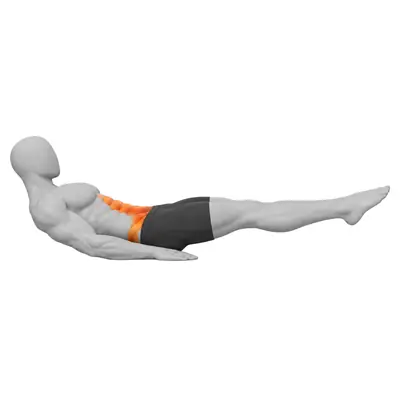
Bodyweight
Steps and tips
Lying on your back with your head, shoulders and straight legs held about six inches off the floor. Works the abs and the front of the hips, held for time.
How to do it
- Lie on your back with your legs straight and your arms by your sides.
- Press your lower back into the floor and brace your abs.
- Lift your head, shoulders and heels about six inches off the floor.
- Hold for the set time, breathing steadily.
Keep in mind
- The lower back stays on the floor. If it arches, raise your legs a little higher.
- Hands under your hips makes it easier on the lower back.
-
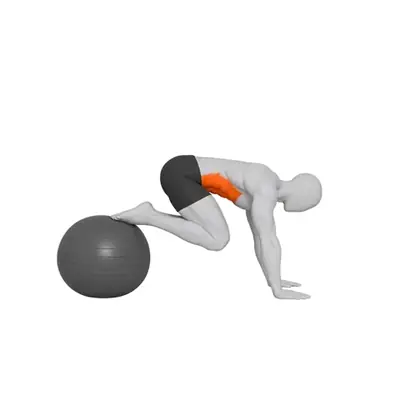
Other
Steps and tips
Also works shoulders.
A push-up position with your shins on a stability ball, pulling your knees toward your chest. Works the abs and hip flexors while the shoulders hold you up.
How to do it
- Kneel in front of the ball, walk your hands forward until your shins rest on it and your body is in one line.
- Brace your core so your hips stay level.
- Pull your knees toward your chest, rolling the ball forward under your shins.
- Roll back out slowly to the straight position.
Keep in mind
- Keep your shoulders over your hands the whole time.
- Do not let your lower back sag when you roll back out.
-
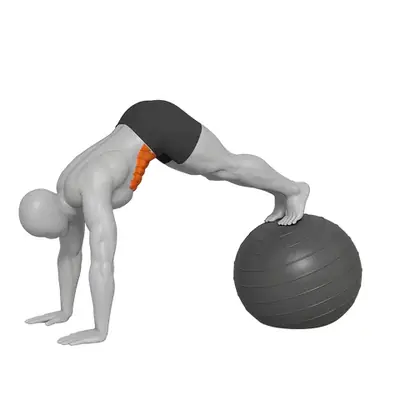
Other
Steps and tips
Also works shoulders.
A push-up position with your feet on a stability ball, lifting your hips high so the ball rolls toward your hands. A hard core exercise that also works the shoulders.
How to do it
- Kneel in front of the ball, walk your hands forward until your shins or feet rest on it and your body is in one line.
- Brace your core.
- Keeping your legs straight, lift your hips toward the ceiling so the ball rolls toward your hands.
- Lower slowly back to the straight position.
Keep in mind
- Legs stay straight. Bending the knees turns it into a knee tuck.
- Keep your shoulders over your hands at the top.
-
Cable
Steps and tips
Also works obliques.
Turning your torso against a cable at chest height while standing. Works the obliques with the hips and legs holding you steady.
How to do it
- Set the pulley at chest height and stand side-on to the machine, holding the handle with both hands at your chest or with straight arms.
- Step away until the weight is off the stack, feet about shoulder width apart.
- Turn your torso away from the machine, keeping your hips mostly facing forward.
- Return slowly. Finish the set, then face the other way.
Keep in mind
- Turn from your torso, not your arms.
- Keep your knees soft and let the back foot pivot.
-
Bodyweight
Steps and tips
Also works shoulders.
A forearm plank on a stability ball, moving your elbows in slow circles. A core exercise that makes a plank much harder.
How to do it
- Kneel in front of the ball and rest your forearms on it, then step your feet back into a plank.
- Brace your core and squeeze your glutes so your body stays in one line.
- Move your forearms in a slow circle, as if stirring a big pot, keeping your hips still.
- Circle one way, then the other, for the set time.
Keep in mind
- Small circles. The wider the circle, the harder it gets.
- Hips stay level and still. If they wobble, make the circle smaller.
-
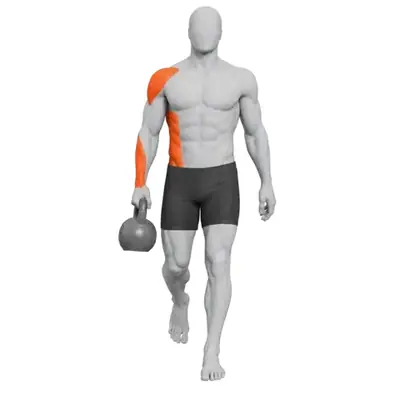
DumbbellKettlebell
Steps and tips
Also works forearms and traps.
Walking with a heavy weight in one hand only. Trains the obliques and the whole trunk to stay upright against a load on one side.
How to do it
- Pick up a dumbbell or kettlebell in one hand and stand tall.
- Brace your core so you do not lean toward or away from the weight.
- Walk with short steady steps, keeping your shoulders level.
- Log the distance for one side, then carry it back with the other hand.
Keep in mind
- Stand as if you were carrying nothing at all. A lean is the sign to drop the weight.
- Keep the shoulder on the loaded side down, not shrugged.
-
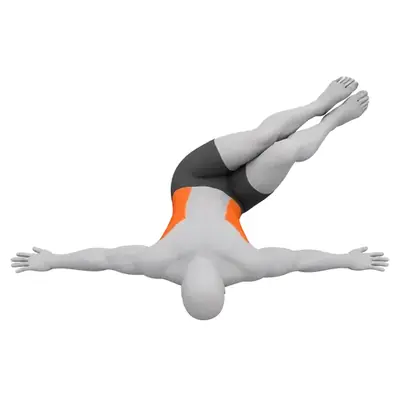
Bodyweight
Steps and tips
Also works obliques.
Lying on your back with your legs raised and lowering them from side to side. Works the obliques and the whole core.
How to do it
- Lie on your back with your arms out to the sides for support and your legs straight up in the air.
- Keeping your shoulders on the floor, lower your legs together toward one side.
- Stop before your shoulder lifts, then bring them back up and over to the other side.
- Keep alternating for the set, counting each side as one rep.
Keep in mind
- Shoulders stay on the floor. If one lifts, you have gone too far.
- Bend your knees to make it easier.
-
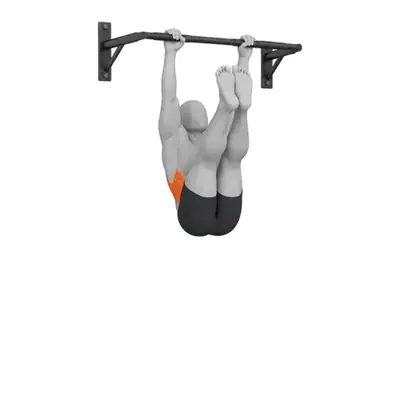
Bodyweight
Steps and tips
Hanging from a bar and swinging your feet up to touch it. A gymnastic core exercise that needs a strong hollow position.
How to do it
- Hang from a bar with straight arms and set a small swing, hollow to arch.
- From the arch, pull down on the bar and drive your hips up, folding at the waist.
- Bring your feet up to touch the bar.
- Let them swing back down under control into the next rep.
Keep in mind
- Practise hanging knee raises and hollow holds first.
- Keep your arms straight and your grip tight. Bending the arms wastes energy.
-
Machine
Steps and tips
Also works obliques.
Turning your torso against the pads of the rotation machine while your hips stay fixed. Works the obliques.
How to do it
- Set the machine so the pads sit against your chest or shoulders and your hips are held still.
- Sit tall and brace your core.
- Turn your torso against the resistance as far as you comfortably can.
- Return slowly. Finish the set, then set the machine for the other side.
Keep in mind
- Turn from the waist, not by pushing with your arms.
- Light weight and a full range beats heavy and short.
-
Machine
Steps and tips
A crunch on the abdominal machine, curling your trunk forward against the pads. Loads the abs without straining the neck.
How to do it
- Set the seat so the pads sit against your upper chest, and hook your feet in if there are rollers.
- Sit tall holding the handles.
- Curl your trunk forward, pulling your ribs toward your hips.
- Return slowly until your abs are stretched.
Keep in mind
- Curl from the ribs, not by bending at the hips.
- The arms only hold the handles.
-
Suspension
Steps and tips
Also works shoulders and chest.
A push-up with your feet in suspension straps, followed by pulling your knees to your chest. Works the chest and core in one rep.
How to do it
- Set the straps low, lie face down, and hook a foot into each cradle, then push up into a plank on your hands.
- Do a push-up.
- At the top, pull your knees toward your chest, lifting your hips slightly.
- Extend your legs back out and repeat.
Keep in mind
- Keep your shoulders over your hands as the knees come in.
- Do not let your hips sag between reps.
-
Suspension
Steps and tips
A high plank with your feet in suspension straps, pulling your knees toward your chest. Works the abs and hip flexors while the shoulders hold you up.
How to do it
- Set the straps to about mid-calf height, kneel facing away from the anchor, and hook the top of each foot into the cradles.
- Walk out into a high plank with your hands under your shoulders and your body in one straight line.
- Brace your core and pull your knees in toward your chest with control, letting your hips rise slightly.
- Pause with your knees under your hips, then press your legs slowly back out to the plank.
Keep in mind
- Do not let your lower back sag when your legs extend.
- Keep your shoulders over your hands as the knees come in.
-
Suspension
Steps and tips
Also works obliques and lower back.
A plank with your feet in suspension straps, pulling your knees toward one elbow and then the other. Works the obliques.
How to do it
- Set the straps low, lie face down, and hook a foot into each cradle, then push up into a plank on your hands.
- Brace your core with your shoulders over your hands.
- Pull your knees toward one elbow, turning your hips slightly.
- Extend back out, then pull toward the other elbow. Keep alternating for the set.
Keep in mind
- Turn the hips, not the shoulders. Your hands stay planted.
- Keep your hips from sagging when your legs extend.
-
Suspension
Steps and tips
Also works hamstrings and glutes.
Lying on your back with one heel in a suspension strap and lifting your hips into a straight line. Works the glutes, hamstrings and core one leg at a time.
How to do it
- Lie on your back with one heel in a strap cradle and the other leg held straight in the air.
- Press your heel down into the strap and lift your hips until your body makes a straight line.
- Hold for the set time, keeping your hips level.
- Lower and switch legs.
Keep in mind
- Keep your hips level. The free side will want to drop.
- Squeeze your glutes to hold the line rather than arching your back.
-
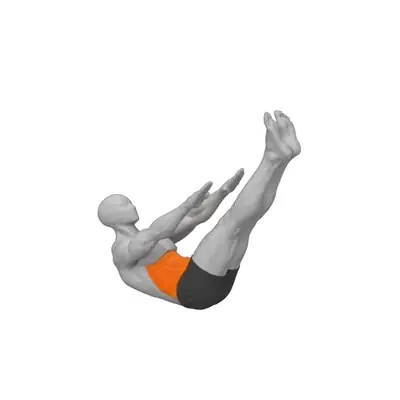
Bodyweight
Steps and tips
Lying flat and folding up to touch your hands to your feet, with straight arms and legs. Works the whole front of the core.
How to do it
- Lie on your back with your arms overhead and your legs straight.
- Lift your arms and legs at the same time, folding at the hips so your body makes a V.
- Touch or reach for your feet at the top.
- Lower slowly back to flat without letting your feet or hands rest on the floor.
Keep in mind
- Keep your arms and legs straight.
- Slow on the way down. Dropping is not lowering.
-
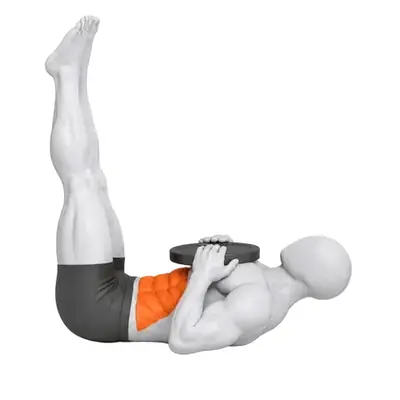
Other
Steps and tips
Also works obliques.
A crunch with your feet up on a wall and a weight held on your chest. Putting the legs on the wall takes the hip flexors out of it.
How to do it
- Lie on your back with your hips close to a wall and your feet resting flat against it, knees bent at about 90 degrees.
- Hold a plate or dumbbell against your chest.
- Curl your shoulders up off the floor, pulling your ribs toward your hips.
- Lower slowly until your shoulders touch the floor.
Keep in mind
- Your lower back stays on the floor. It is a curl, not a sit-up.
- Keep the weight on your chest, not held out in front of you.
Nothing here matches that equipment.
Also works your core
22 exercises from other groups
These are filed under another muscle, and work your core as well.
- Bird DogBack
- Cat-CowBack
- Copenhagen PlankGlutes & Hips
- Farmers CarryBack
- Gorilla RowBack
- Handstand WalkShoulders
- InchwormHamstrings
- Kettlebell Lunge PressShoulders
- Kettlebell Pistol SquatGlutes & Hips
- Medicine Ball Rotational ThrowFull Body & Power
- Medicine Ball SlamFull Body & Power
- Overhead CarryShoulders
- Renegade RowBack
- Reverse Nordic CurlQuads
- Rope ClimbBack
- Sandbag Clean & CarryFull Body & Power
- Side Plank with Leg LiftGlutes & Hips
- Single Arm Cable PressChest
- TRX Clock PressChest
- TRX Single Arm Chest PressChest
- Turkish Get-UpFull Body & Power
- Wall WalkShoulders
Photos: Heather Jacoby on Unsplash. Exercise animations by RepDB. Muscle pictures drawn from react-native-body-highlighter (MIT licence).
Coming soon to iOS
Ready to throw the notes app out?
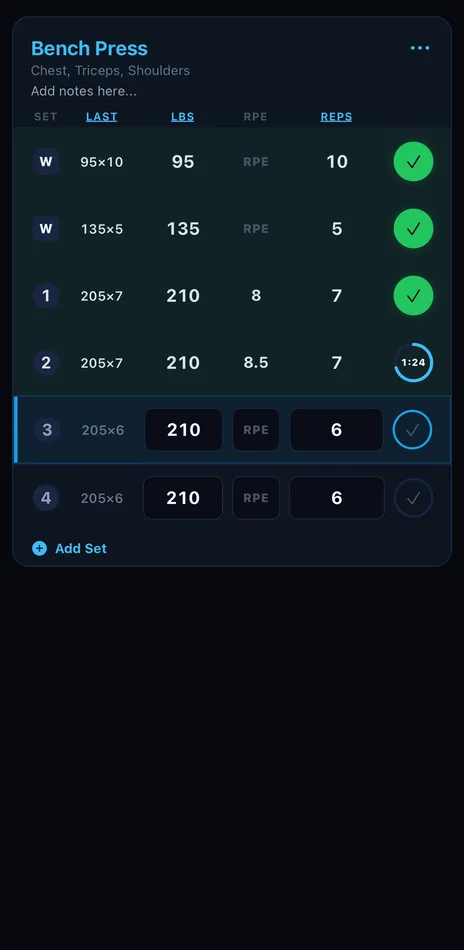
All 69 core exercises on this page are already in SetLift. Log your sets as you go, and next session it shows you what you lifted last time.
Free forever plan. No ads, no trackers.