How Barbell Plate Math Works
Plate math is easy until you're four heavy sets into squats. Load one side wrong and the bar tips, your bar path drifts, and the set is wasted.
To figure out what goes on each side of the bar:
- Subtract the bar weight (usually 45 lbs or 20 kg) and any collars from your target.
- Divide what's left by 2. That's your load per side.
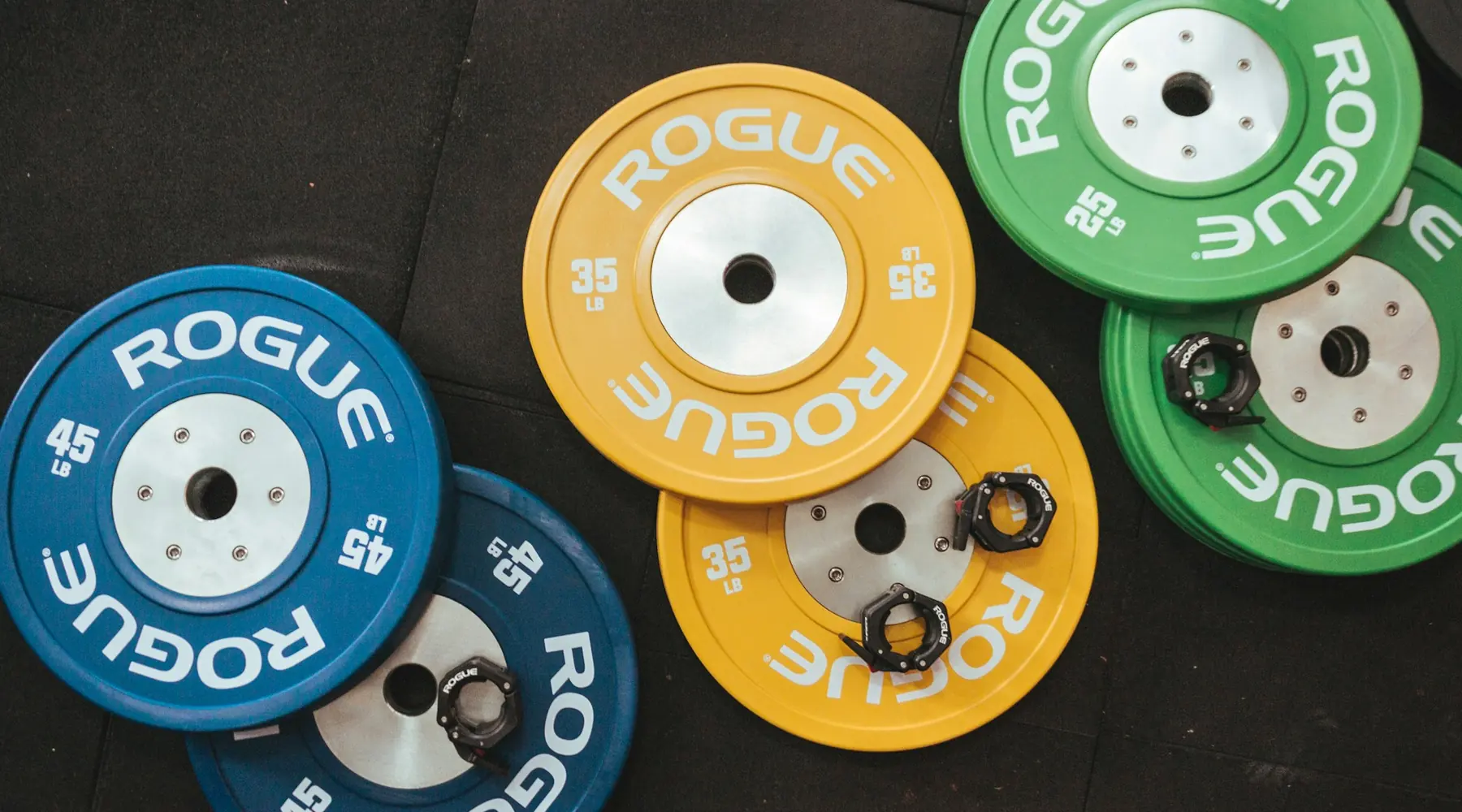
- Load the heaviest plates first, flush against the collar, and finish with the smaller plates on the outside.
Example: 225 lbs on a 45 lb bar leaves 180 lbs, or 90 lbs per side, which is two 45s. If you don't know your target yet, the 1RM calculator gives you working weights and links each one straight back here.
Standard Barbell Weights
Not every bar in a commercial gym weighs 45 lbs. Check which one you're using before you load it:
- Men's Olympic bar: 45 lbs (20 kg), about 28-29 mm grip diameter and 7.2 ft long. The default in most gyms.
- Women's Olympic bar: 35 lbs (15 kg), 25 mm grip diameter and about 6.6 ft long.
- Technique bars: usually 15-25 lbs (5-10 kg), for learning the lifts with light loads.
Frequently Asked Questions
Do barbell collars count toward total weight?
Spring clips and most plastic lock collars weigh so little they're usually ignored. Competition collars weigh 2.5 kg (about 5 lbs) each, so a pair adds 5 kg (about 10 lbs) and should be counted in your total.
Why should I put the heaviest plates on the inside?
Heavy plates closest to the collar keep the load near the center of the bar, which makes it more stable. It also lets you add or strip small plates on the outside without unloading the big ones.
What if my gym only has 45s, 25s, and 10s?
Open Plate Inventory & Collars and uncheck the sizes your gym doesn't have. The calculator will only use the plates you have, and if your target can't be loaded exactly it suggests the closest weights above and below.
How much does a standard barbell weigh?
A standard men's Olympic barbell weighs 45 lbs (20 kg). A women's Olympic barbell weighs 35 lbs (15 kg), and technique bars usually weigh 15 to 25 lbs (5 to 10 kg).
This calculator and its content are for educational purposes only and are not medical advice. Check with a physician before starting an intense resistance training program.